|
After the Port of Yokohama was opened to foreign trade in 1859, many foreigners settled there. Wishing to minimize contact between these foreigners and Japanese citizens, the government of the time established a separate settlement, and foreigners were permitted to reside only within its walls. However, with the increasing number of foreigners in Yokohama, the settlement became very crowded, and the government eventually granted permission for Yokohama's foreign residents to live in the Yamate district. As a result, many European-style residences were built in this elevated region, which was known as Yamate Bluff.
Yamate-cho (the cho suffix meaning street) runs along the top of Yamate Bluff, and is important to the Johnson family since that is where Stuart Plaza (Uncle Stuart's business) was located. In addition, that is where Jane lived for her first year in Japan, in a duplex behind Stuart Plaza. Please come with us as Jane relives her first year out of college and the fulfillment of her life-long dream of living in Japan!
Yamate
Prev
Next
|
|
|
|
|
|
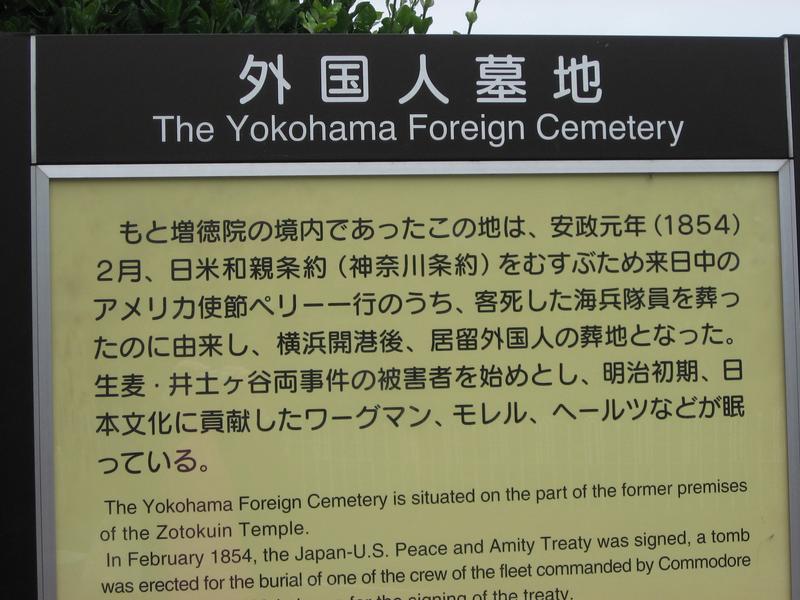
Across the road from the Yamate Museum is the Yokohama Foreign Cemetery (Gaijin Bochi), where foreigners who contributed to Japan's modernization are buried. They include Robert Williams (a sailor who came to Japan in 1853 with Commodore Perry's fleet and died in an accident the following year), Charles Richardson (who was killed by a daimyo's retainers in the notorious Namamugi Incident of 1862), and Edmund Morel (the founding father of Japan's railways). Buried here are more than 4,000 people from over 40 countries, who were active in various spheres ranging from science and engineering to cultural fields such as education and painting.
|
|